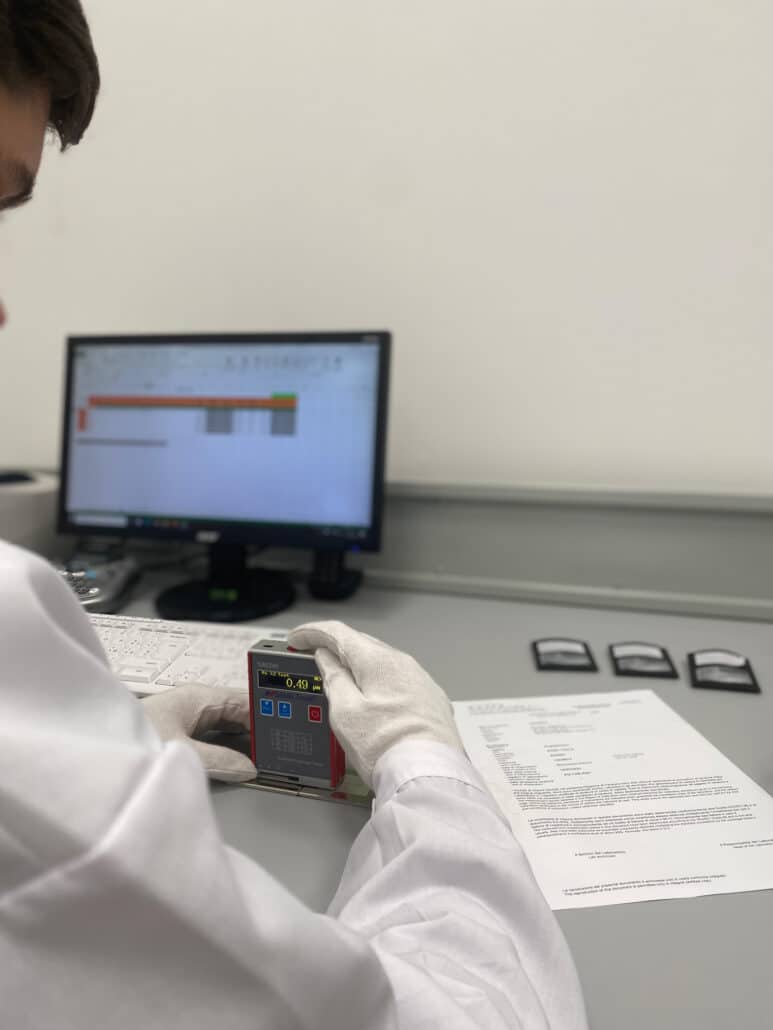
The issue with measuring instrument calibration isn’t the calibration itself but everything around it: multiple suppliers, separate orders, shipments to coordinate, certificates to verify.
Fragmented calibration management is not a technical problem, but an organizational one.
If you recognize yourself in at least two of the following situations, your calibration process is already consuming more resources than necessary:
- you rely on multiple suppliers for different instruments
- you manage due dates manually
- you have to check each time which laboratory is accredited
- you spend time coordinating shipments and returns
This is where the approach needs to change: instead of coordinating multiple suppliers, you work with a single point of contact that oversees the entire process.
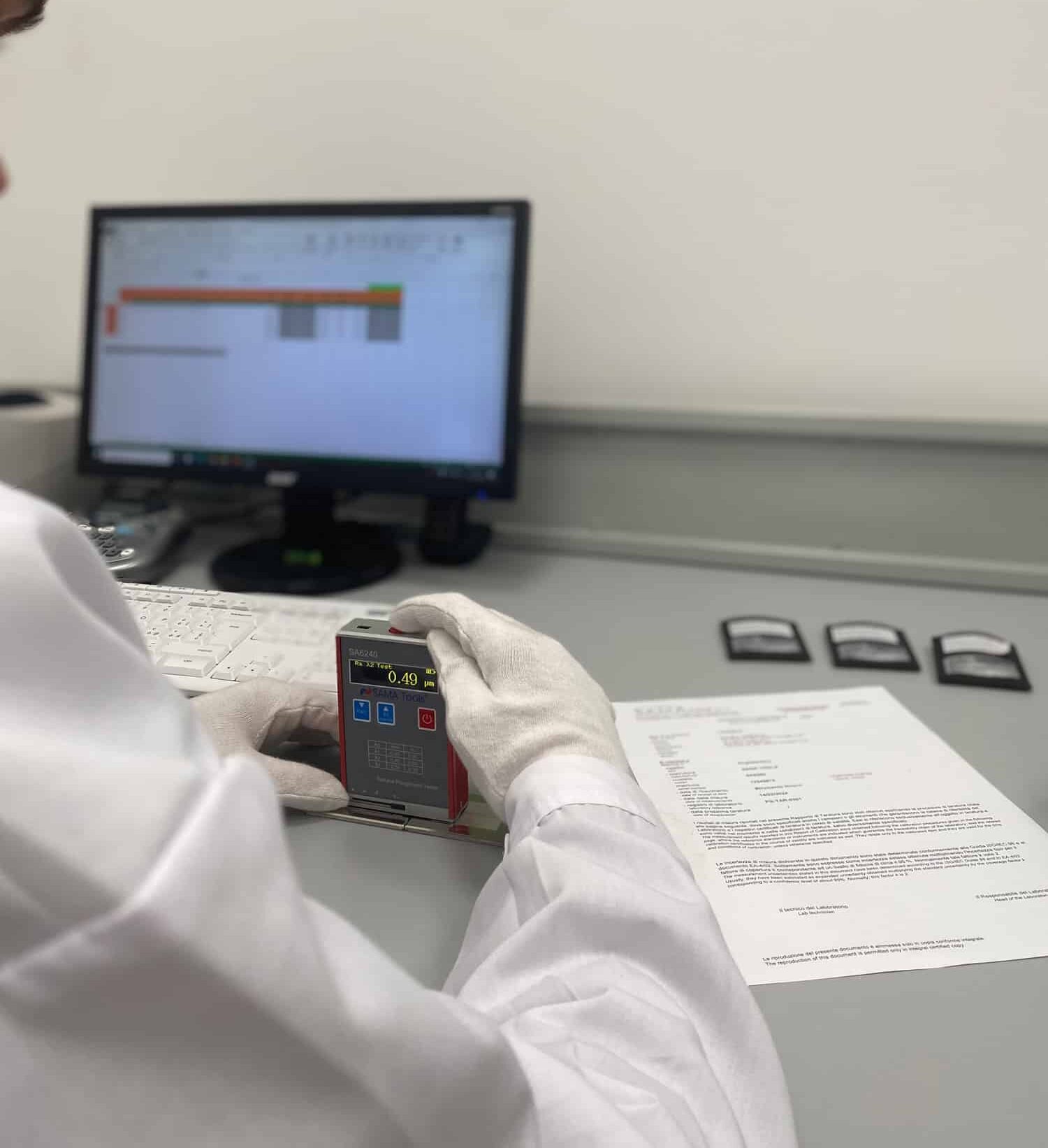
At S.A.M.A. Italia, we carry out calibrations directly in our own laboratories, issuing calibration certificates traceable to national primary standards.
When an ACCREDIA certificate is required, we select the most suitable accredited laboratory and manage the entire process and make sure the instruments are returned with the corresponding certificates.
In this article, we look at what it means in practical terms to move from a fragmented approach to a single coordinator that organizes the calibration of all your instruments.
The Hidden Challenge in Managing Calibrations
Many companies still manage instrument calibration in a fragmented way, often without realizing it.
Each instrument is treated individually, leaving the quality manager responsible for:
- identifying the appropriate laboratory
- checking accreditations and measurement ranges
- comparing uncertainties
- coordinating shipments
- reviewing certificates
In many cases, we have seen quality managers spend entire days just coordinating these activities: collecting calibration certificates, validating them and archiving them correctly.
The complexity increases as the number and variety of instruments grows.
An accredited laboratory is not necessarily suitable for every instrument.
No laboratory is accredited for all measurement quantities: each one operates within defined ranges and uncertainties.
This is why calibration cannot be approached generically, but must be assessed case by case.
How Often and When Measuring Instruments Must Be Calibrated
One of the most common questions is: How often should measuring instruments be calibrated?
There is no universal answer, because the frequency always depends on how the instrument is used in the process.
Key factors include how often it is used, how critical it is for product conformity, the operating environment (heat, cold, contamination, cleanliness), and any customer or regulatory requirements.
In many cases, we see companies applying standard intervals without a real assessment.
The result is always the same.
On one side, instruments are calibrated too often which leads to unnecessary costs.
On the other, instruments are left too long without being checked, creating a real quality risk.
From a compliance perspective, calibration is required whenever the instrument has an impact on product conformity.
It isn’t a deadline to be followed on a calendar. It’s a condition where the instrument that is being used gives reliable results. This is why, every company should have a structured calibration plan that defines intervals, instrument by instrument, based on actual usage.
Do you have other questions about calibration?
On our calibration page, you’ll find more practical insights on calibration intervals, certificates, and instrument management.
👉 Visit the calibration FAQ page
The Hidden Costs of a Fragmented System
Distributed calibration management generates costs that are often not considered.
Each supplier typically involves:
- a purchase order
- administrative processing
- a shipment
Multiplied across dozens of instruments, these costs quickly accumulate. On top of that, there are the indirect costs:
- instruments sent to the wrong laboratory
- unsuitable certificates
- delays that stop production
As the number of suppliers increases, the process becomes progressively more complex to manage.
The Consequences of Managing Multiple Suppliers
Multi-supplier management creates ongoing inefficiencies because each laboratory has different lead times, procedures, and processes.
This means the quality manager has to coordinate everything manually.
When a calibration needs to be checked, the correct supplier must be contacted; when planning is required, multiple schedules must be aligned and cross-referenced.
The real question is not whether this system works, but how much time it’s costing you each week.
The Value of a Single Coordinator
Relying on a single supplier changes the management model, because it is not just about simplifying processes, but about having someone who takes full ownership of them.
What if a single supplier managed your entire instrument pool and coordinated the laboratories on your behalf?
The value is not in working with multiple suppliers, but in having the right partner coordinating them.
A single point of contact means:
- one operational workflow
- one document management system
- one control point
A calibration service for measuring instruments managed through a single coordinator and provider.
Multiple Suppliers vs A Single Coordinator: An Operational Comparison
| Factors | Multiple suppliers | Single coordinator/supplier (S.A.M.A. Italia) |
| Number of Orders | Multiple separate orders | One single order |
| Shipment management | Multiple and separate | One coordinated shipment |
| Laboratory selection | Managed internally | Handled by S.A.M.A. Italia |
| Certificate control | Inconsistent | Centralized verification |
| Follow-up and reminders | Managed by the client | Handled by S.A.M.A. Italia |
| Administrative time | High and fragmented | Reduced and structured |
| Error risk | High | Reduced |
| Operational stress | Constant | Minimal |
How S.A.M.A. Italia Operates
S.A.M.A. Italia manages the calibration of measuring instruments through a structured process.
For calibrations performed by us, internally, we issue calibration reports directly, with traceability to primary standards.
For ACCREDIA calibrations, we coordinate a selected network of qualified laboratories.
We do not simply handle shipments; each instrument is assessed as if it were used within our own production environment.
The process starts with an analysis of the entire instrument portfolio:
- measurement quantity
- measurement range
- required uncertainty (learn more about the concept of measurement uncertainty)
- process criticality
Based on this assessment, we define the most suitable calibration path for each instrument.
The choice of laboratory is always aligned with customer requirements and the actual application of the instrument.
You can find more information on our dedicated page for measuring instrument calibration.
The Challenge of Managing Follow-Ups with Calibration Laboratories
There is also an operational aspect that has a much greater impact than one might think: following up with laboratories.
When working with multiple suppliers, the responsibility falls on you to monitor every order, request status updates, and follow up on delayed deliveries.
A single coordinator eliminates this burden entirely.
S.A.M.A. Italia tracks orders, acts as a liaison directly with accredited laboratories, and handles any delays without involving the client.
When this applies to dozens of instruments simultaneously, time and stress is immediately reduced.
We don’t just manage calibrations, we manage the entire process surrounding them.
“The service provided by technician Marco Gnech was excellent. He was punctual, courteous, and highly knowledgeable. His explanation of how the instrument works was clear and easy to understand.”
Simone, S.A.M.A. Italia customer
Calibration Procedure for Measuring Instruments
Effective management follows a clear procedure:
- Instrument identification
- Analysis of its use
- Definition of the required accuracy
- Selection of the correct laboratory
- Execution of the calibration
- Verification of the certificate
- Scheduling of the next due date
A common mistake is to start directly with shipping the instrument.
The process should begin much earlier.
Choosing the Right Laboratory
Selecting the laboratory is one of the most critical steps.
We evaluate:
- measurement capability
- uncertainties
- experience with the specific instrument
- reliability
In many cases, companies receive certificates that are formally correct but not usable within their process.
This typically happens when the selection is not aligned with the instrument’s actual application.
How Much Time and Money Can Be Really Saved
A company managing around 50 instruments through multiple suppliers typically spends an average of 4–6 hours per week on coordination activities.
With a single supplier, this time can be reduced to about 1 hour, saving over 200 hours a year.
This results in lower administrative and logistics costs, fewer operational errors, and greater overall control.
Case Study: An Automotive Company
An automotive company in Modena, Italy was managing 75 instruments across 8 different suppliers. The quality manager was spending around 5 hours a week on coordination, and during an audit the following issues emerged:
- inadequate certificates
- disorganised documentation
- difficulties in control
After centralizing the process:
- time reduced to 1 hour per week
- number of orders drastically reduced
- consistent documentation
- no non-conformities during audits
“We are very pleased with both the calibration service turnaround time and the after-sales support received.”
Magda Fedrigo, S.A.M.A. Italia customer
Frequently Asked Questions about Measuring Instrument Calibration
Is it mandatory to calibrate measuring instruments?
Calibration of measuring instruments is mandatory in all production environments operating under a quality management system certified to ISO 9001. The requirement applies to all instruments that directly affect the quality of the product or service.
In the area of legal metrology, certain categories of instruments—such as scales, meters, and devices used for fiscal measurements—are subject to mandatory periodic verification by law, regardless of quality certification.
Even where no explicit regulatory obligation exists, calibration is strongly recommended to ensure measurement traceability and compliance with customer requirements.
How is calibration frequency determined?
Calibration frequency is not fixed by law but it must be determined by each company based on objective, documented criteria. The main factors to consider are:
Intensity of use — an instrument used daily requires more frequent calibration than one used occasionally
Environmental conditions — exposure to extreme temperatures, vibrations, or harsh environments accelerates instrument drift
Previous calibration history — if an instrument is repeatedly found out of tolerance, the frequency should be increased
Manufacturer’s recommendations —technical documentation often includes recommended intervals
Customer or regulatory requirements — certain contracts or certifications may set mandatory frequencies
ISO 9001 also requires that calibration frequency be reviewed periodically and adjusted whenever historical data indicates it is necessary.
Choosing Between ACCREDIA and Traceable Calibration
When is ACCREDIA calibration required and when is traceable calibration sufficient?
The answer depends on the context in which the instrument is used and the regulatory or contractual obligations that are involved.
ACCREDIA calibration is required when:
Your quality system is ISO 9001 certified and it’s explicitly requested by the customer or certification body
You operate in regulated industries such as pharmaceutical, medical, aerospace, or food
You must provide evidence of measurement traceability during audits, inspections, or disputes
The supply terms require certificates issued by ISO/IEC 17025 accredited laboratories
Traceable calibration is sufficient when:
There are no specific regulatory or contractual obligations
The instrument is used for non-critical internal measurements
It is intended as a preliminary check prior to official calibration
The practical difference is that an ACCREDIA certificate has legal value and is internationally recognized through the accreditation system represented by EA, ILAC, and IAF bodies. A traceable calibration guarantees measurement traceability but does not hold the same weight in external audits.
When in doubt, S.A.M.A. Italia can help you in identifying the most appropriate calibration type for your specific case.
“Every year, they verify and certify the pressure gauge that I use to test scuba tanks. Outstanding professionalism.”
Luca Carosini, S.A.M.A. Italia customer
Summary
Managing calibrations across multiple suppliers is not a technical issue, but an organizational one that over time translates into lost hours, avoidable errors, and limited visibility over what is actually happening within your instrument portfolio.
Centralising instrument management means relying on a single point of contact to handle the entire process.
At S.A.M.A. Italia, we perform calibrations directly in our own laboratories, issuing calibration reports that are traceable to national standards. When an ACCREDIA certificate is required, we select the most suitable laboratory and manage the entire process up to returning the instruments back to your company.
We can analyse your instrument portfolio and clearly highlight where time is being lost, where hidden costs are generated, and what can be immediately simplified.
We can also advise you on whether to choose an ACCREDIA certificate or a calibration report. In any case, you will always have a single point of reference throughout the entire process.
This is not a commercial offer, but an operational assessment. If you would like to discuss this topic, you can contact us.
It means eliminating having to coordinate multiple suppliers, shipments, and certificates, and replacing it with a single controlled workflow.
If you want to explore calibration types and managed instruments in more detail, feel free to contact us.