

Accelerated aging equipment
Accelerated aging tests make it possible to expose materials, coatings, components and finished products to controlled environmental conditions in order to assess their behaviour before use, during development or in quality-control activities.
Sunlight, UV radiation, temperature, humidity, rain, condensation and saline atmospheres can alter the appearance and characteristics of a surface over time. Discoloration, gloss loss, cracking, chalking, oxidation, corrosion and mechanical changes are among the phenomena that may be observed during testing.
Accelerated aging chambers do not replace real outdoor exposure and do not make it possible to directly convert test hours into years of service life. They do, however, allow materials, formulations, treatments and production cycles to be compared under repeatable conditions, providing useful information for research and development, quality control and component selection.
Evaluation of samples after exposure
At the end of the cycle, samples can be compared with unexposed or reference test panels according to the criteria defined by the test plan. In UV and Xenon tests, assessment may concern colour changes, gloss loss, dulling, chalking, cracking, blistering, flaking, adhesion loss and other changes in surface or mechanical properties.
In salt spray tests, assessment may instead focus on the appearance of corrosion products, the degree of rusting, coating degradation and corrosion propagation at any scribe marks. In this way, the test provides practical elements for comparing materials, treatments, finishes and production cycles.
Which accelerated aging test should you choose
Instrument selection depends on the environmental factor to be reproduced and the behaviour to be verified.
Climate chambers control temperature and relative humidity, making them suitable for stability, conditioning and climate-change tests. UV chambers use fluorescent lamps to focus the test on the ultraviolet component of light, with cycles that may include temperature, condensation or water spray depending on the model.
Xenon chambers use a broad-spectrum lamp that includes UV radiation, visible light and infrared. The selected filter makes it possible to define the type of light exposure applied to the sample, such as direct sunlight, light filtered through glass or more severe UV conditions.
Salt spray chambers are dedicated to assessing corrosion resistance in a controlled saline atmosphere. They are particularly suitable for metals, electroplated treatments, zinc coatings, paints, protective coatings, accessories and components intended for humid or saline environments.
Climate chambers for temperature and humidity
SA897 climate chambers make it possible to set constant conditions or programmable temperature and humidity cycles. Versions with 100 and 225 litre capacities are available, with different temperature ranges to adapt the configuration to sample volume and the minimum temperature required by the test.
This type of chamber is used to assess the behaviour of materials, packaging, electrical and electronic components, finished products, coatings, leather, fashion accessories and finishes subjected to environmental changes.
Climate tests can be useful for checking stability, dimensional changes, the behaviour of plastics and composite materials, humidity resistance, component sealing or changes in surfaces and finishes. Temperature and relative humidity must always be considered together, because the available combinations depend on the climate range that can be controlled by the chamber.
The SA897 includes monitoring software and a LAN interface for data management and remote control, improving the traceability of cycles carried out in-house.
UV aging with fluorescent lamps
UV test chambers are suitable when the main objective is to assess the effect of ultraviolet radiation on paints, coatings, plastics, rubber, treated wood, composite materials and decorative surfaces.
The SAUV852 bench UV chamber is a compact solution for tests on limited quantities of test panels. Samples are mounted on a rotating drum that keeps them at the same distance from the UV lamps during the cycle, promoting uniform exposure between the different test panels. The chamber manages temperature and water spray and is suitable for quick comparisons between small panels, materials, colours, finishes and formulations.
The SAUV856 chamber is designed for more advanced UV tests and a higher number of test panels. It can be configured with UVA or UVB lamps and allows cycles with adjustable irradiance, condensation and water spray to be programmed. Automatic irradiance control compensates for changes in light intensity caused by the natural aging of the lamps, helping maintain more consistent conditions over time.
UVA lamps are normally used when a more representative reproduction of the UV component of sunlight is required. UVB lamps instead create more severe exposure conditions, useful for accelerated comparisons or for materials with particularly high weathering resistance.
Xenon tests for sunlight, light through glass and cycles with water
Xenon tests are suitable when it is important to assess not only the effect of UV radiation, but also the influence of visible light and infrared on colour, gloss, finishes and the surface behaviour of the sample.
The SAXT865 bench Xenon chamber is intended for Xenon tests without spray. It can be used for painted panels, coatings, plastics, decorative materials, prints, fabrics and components exposed to light. Irradiance is adjustable and automatically controlled, while black panel temperature makes it possible to monitor the thermal contribution of exposure on the test panel.
The SAXT866 is a Xenon chamber with a spray function, suitable when the test needs to alternate light, temperature, humidity, water spray, condensation and dark phases. It is suitable for assessing the combined effect of irradiance and periodic wetting on coatings, polymeric materials, outdoor components, decorative surfaces and accessories.
Xenon chambers can be configured with different filters according to the required type of exposure. The Daylight filter is suitable for tests on materials intended for direct sunlight, while the Window Glass filter reproduces light filtered through a glazed surface, useful for materials used indoors. The Extended UV filter is selected when more severe exposure conditions are required.
Salt spray for corrosion tests
SASSC salt spray chambers are dedicated to corrosion tests on metal parts, electroplated treatments, zinc coatings, nickel plating, chrome plating, paint finishes, protective coatings and components intended for saline or humid environments.
The chamber creates a controlled salt spray atmosphere in which samples are exposed to verify the appearance and progression of corrosion phenomena. Tests make it possible to compare materials, treatments, suppliers and production processes, identifying coating discontinuities, porosity, protection defects or differences in behaviour between samples.
Models with different internal capacities are available, allowing the chamber to be selected according to component dimensions and the number of test panels to be exposed in the same cycle.
When the applicable method requires a scribe mark on the coated panel before the test, the SASMM539 test panel scribing machine makes it possible to prepare samples with a more controlled and repeatable trace than manual processing.
Materials and application sectors
Accelerated aging equipment is used in many industrial sectors where materials and components may be exposed to light, humidity, heat, water or corrosive agents.
It is used on paints and coatings, plastics, rubber, composites, wood, fabrics, prints, adhesives, leather, fashion accessories, automotive and motorcycle components, construction materials, windows and doors, outdoor furniture, packaging, electroplated treatments and metal parts.
In the fashion and luxury sector, these tests help assess the behaviour of finishes, accessories, coatings and decorative materials when exposed to light, humidity or corrosion. In tanneries, they can be used to check the response of leather, surface treatments, coatings and accessories to changes in temperature and humidity.
Technical references and definition of the test cycle
Cycle selection must always start from the material, the environment of use and the characteristic to be verified. There is no single test valid for every application.
For salt corrosion tests, ISO 9227 defines methods such as neutral salt spray, acetic acid salt spray and copper-accelerated acetic acid salt spray. Test duration and assessment criteria, however, must be defined by the specification applicable to the part being checked.
For paints and coatings, fluorescent UV tests can be set according to ISO 16474-3, while Xenon tests may refer to ISO 16474-2. For plastics and polymeric materials, the most relevant references are ISO 4892-3 for fluorescent UV lamps and ISO 4892-2 for Xenon lamps.
Standards do not identify only the type of chamber; they also define the light source, filter, irradiance, temperature, presence of water, exposure duration, sample preparation and assessment criteria. For this reason, the test cycle must be selected consistently with the actual application.
How to choose the most suitable instrument
Selection depends first of all on the environmental factor that may affect the component.
To control temperature and humidity, the appropriate solution is an SA897 climate chamber. To verify corrosion resistance in a saline atmosphere, an SASSC chamber is required. For tests focused on UV radiation, SAUV852 and SAUV856 chambers are available, while SAXT865 and SAXT866 Xenon chambers can be selected to assess materials exposed to a broader light spectrum.
The assessment must consider the size and number of samples, the type of light source, the need for spray or condensation, the required temperature range, the optical filter to be used, data collection and the level of control required during the cycle.
Accelerated aging equipment
Accelerated aging tests make it possible to expose materials, coatings, components and finished products to controlled environmental conditions in order to assess their behaviour before use, during development or in quality-control activities.
Sunlight, UV radiation, temperature, humidity, rain, condensation and saline atmospheres can alter the appearance and characteristics of a surface over time. Discoloration, gloss loss, cracking, chalking, oxidation, corrosion and mechanical changes are among the phenomena that may be observed during testing.
Accelerated aging chambers do not replace real outdoor exposure and do not make it possible to directly convert test hours into years of service life. They do, however, allow materials, formulations, treatments and production cycles to be compared under repeatable conditions, providing useful information for research and development, quality control and component selection.
Evaluation of samples after exposure
At the end of the cycle, samples can be compared with unexposed or reference test panels according to the criteria defined by the test plan. In UV and Xenon tests, assessment may concern colour changes, gloss loss, dulling, chalking, cracking, blistering, flaking, adhesion loss and other changes in surface or mechanical properties.
In salt spray tests, assessment may instead focus on the appearance of corrosion products, the degree of rusting, coating degradation and corrosion propagation at any scribe marks. In this way, the test provides practical elements for comparing materials, treatments, finishes and production cycles.
Which accelerated aging test should you choose
Instrument selection depends on the environmental factor to be reproduced and the behaviour to be verified.
Climate chambers control temperature and relative humidity, making them suitable for stability, conditioning and climate-change tests. UV chambers use fluorescent lamps to focus the test on the ultraviolet component of light, with cycles that may include temperature, condensation or water spray depending on the model.
Xenon chambers use a broad-spectrum lamp that includes UV radiation, visible light and infrared. The selected filter makes it possible to define the type of light exposure applied to the sample, such as direct sunlight, light filtered through glass or more severe UV conditions.
Salt spray chambers are dedicated to assessing corrosion resistance in a controlled saline atmosphere. They are particularly suitable for metals, electroplated treatments, zinc coatings, paints, protective coatings, accessories and components intended for humid or saline environments.
Climate chambers for temperature and humidity
SA897 climate chambers make it possible to set constant conditions or programmable temperature and humidity cycles. Versions with 100 and 225 litre capacities are available, with different temperature ranges to adapt the configuration to sample volume and the minimum temperature required by the test.
This type of chamber is used to assess the behaviour of materials, packaging, electrical and electronic components, finished products, coatings, leather, fashion accessories and finishes subjected to environmental changes.
Climate tests can be useful for checking stability, dimensional changes, the behaviour of plastics and composite materials, humidity resistance, component sealing or changes in surfaces and finishes. Temperature and relative humidity must always be considered together, because the available combinations depend on the climate range that can be controlled by the chamber.
The SA897 includes monitoring software and a LAN interface for data management and remote control, improving the traceability of cycles carried out in-house.
UV aging with fluorescent lamps
UV test chambers are suitable when the main objective is to assess the effect of ultraviolet radiation on paints, coatings, plastics, rubber, treated wood, composite materials and decorative surfaces.
The SAUV852 bench UV chamber is a compact solution for tests on limited quantities of test panels. Samples are mounted on a rotating drum that keeps them at the same distance from the UV lamps during the cycle, promoting uniform exposure between the different test panels. The chamber manages temperature and water spray and is suitable for quick comparisons between small panels, materials, colours, finishes and formulations.
The SAUV856 chamber is designed for more advanced UV tests and a higher number of test panels. It can be configured with UVA or UVB lamps and allows cycles with adjustable irradiance, condensation and water spray to be programmed. Automatic irradiance control compensates for changes in light intensity caused by the natural aging of the lamps, helping maintain more consistent conditions over time.
UVA lamps are normally used when a more representative reproduction of the UV component of sunlight is required. UVB lamps instead create more severe exposure conditions, useful for accelerated comparisons or for materials with particularly high weathering resistance.
Xenon tests for sunlight, light through glass and cycles with water
Xenon tests are suitable when it is important to assess not only the effect of UV radiation, but also the influence of visible light and infrared on colour, gloss, finishes and the surface behaviour of the sample.
The SAXT865 bench Xenon chamber is intended for Xenon tests without spray. It can be used for painted panels, coatings, plastics, decorative materials, prints, fabrics and components exposed to light. Irradiance is adjustable and automatically controlled, while black panel temperature makes it possible to monitor the thermal contribution of exposure on the test panel.
The SAXT866 is a Xenon chamber with a spray function, suitable when the test needs to alternate light, temperature, humidity, water spray, condensation and dark phases. It is suitable for assessing the combined effect of irradiance and periodic wetting on coatings, polymeric materials, outdoor components, decorative surfaces and accessories.
Xenon chambers can be configured with different filters according to the required type of exposure. The Daylight filter is suitable for tests on materials intended for direct sunlight, while the Window Glass filter reproduces light filtered through a glazed surface, useful for materials used indoors. The Extended UV filter is selected when more severe exposure conditions are required.
Salt spray for corrosion tests
SASSC salt spray chambers are dedicated to corrosion tests on metal parts, electroplated treatments, zinc coatings, nickel plating, chrome plating, paint finishes, protective coatings and components intended for saline or humid environments.
The chamber creates a controlled salt spray atmosphere in which samples are exposed to verify the appearance and progression of corrosion phenomena. Tests make it possible to compare materials, treatments, suppliers and production processes, identifying coating discontinuities, porosity, protection defects or differences in behaviour between samples.
Models with different internal capacities are available, allowing the chamber to be selected according to component dimensions and the number of test panels to be exposed in the same cycle.
When the applicable method requires a scribe mark on the coated panel before the test, the SASMM539 test panel scribing machine makes it possible to prepare samples with a more controlled and repeatable trace than manual processing.
Materials and application sectors
Accelerated aging equipment is used in many industrial sectors where materials and components may be exposed to light, humidity, heat, water or corrosive agents.
It is used on paints and coatings, plastics, rubber, composites, wood, fabrics, prints, adhesives, leather, fashion accessories, automotive and motorcycle components, construction materials, windows and doors, outdoor furniture, packaging, electroplated treatments and metal parts.
In the fashion and luxury sector, these tests help assess the behaviour of finishes, accessories, coatings and decorative materials when exposed to light, humidity or corrosion. In tanneries, they can be used to check the response of leather, surface treatments, coatings and accessories to changes in temperature and humidity.
Technical references and definition of the test cycle
Cycle selection must always start from the material, the environment of use and the characteristic to be verified. There is no single test valid for every application.
For salt corrosion tests, ISO 9227 defines methods such as neutral salt spray, acetic acid salt spray and copper-accelerated acetic acid salt spray. Test duration and assessment criteria, however, must be defined by the specification applicable to the part being checked.
For paints and coatings, fluorescent UV tests can be set according to ISO 16474-3, while Xenon tests may refer to ISO 16474-2. For plastics and polymeric materials, the most relevant references are ISO 4892-3 for fluorescent UV lamps and ISO 4892-2 for Xenon lamps.
Standards do not identify only the type of chamber; they also define the light source, filter, irradiance, temperature, presence of water, exposure duration, sample preparation and assessment criteria. For this reason, the test cycle must be selected consistently with the actual application.
How to choose the most suitable instrument
Selection depends first of all on the environmental factor that may affect the component.
To control temperature and humidity, the appropriate solution is an SA897 climate chamber. To verify corrosion resistance in a saline atmosphere, an SASSC chamber is required. For tests focused on UV radiation, SAUV852 and SAUV856 chambers are available, while SAXT865 and SAXT866 Xenon chambers can be selected to assess materials exposed to a broader light spectrum.
The assessment must consider the size and number of samples, the type of light source, the need for spray or condensation, the required temperature range, the optical filter to be used, data collection and the level of control required during the cycle.
Read more…


Salt spray fog cabinets for corrosion testing – SASSC880 / SASSC881 / SASSC882 / SASSC883
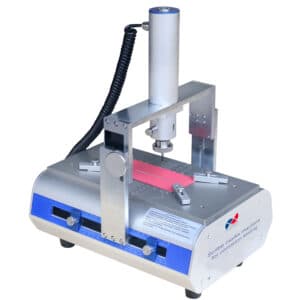
Scribe marks machine for corrosion testing – SASMM539
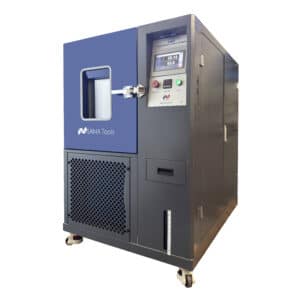
Climate Chambers – SA897

UV light chamber for accelerated aging – SAUV856

Bench UV Light Chamber – SAUV852

Bench Xenon test chamber – SAXT865
